

Ensuring a strong and reliable wireless network is critical for maintaining operational efficiency, as demonstrated by the case of manufacturing plant in Ontario, Canada.
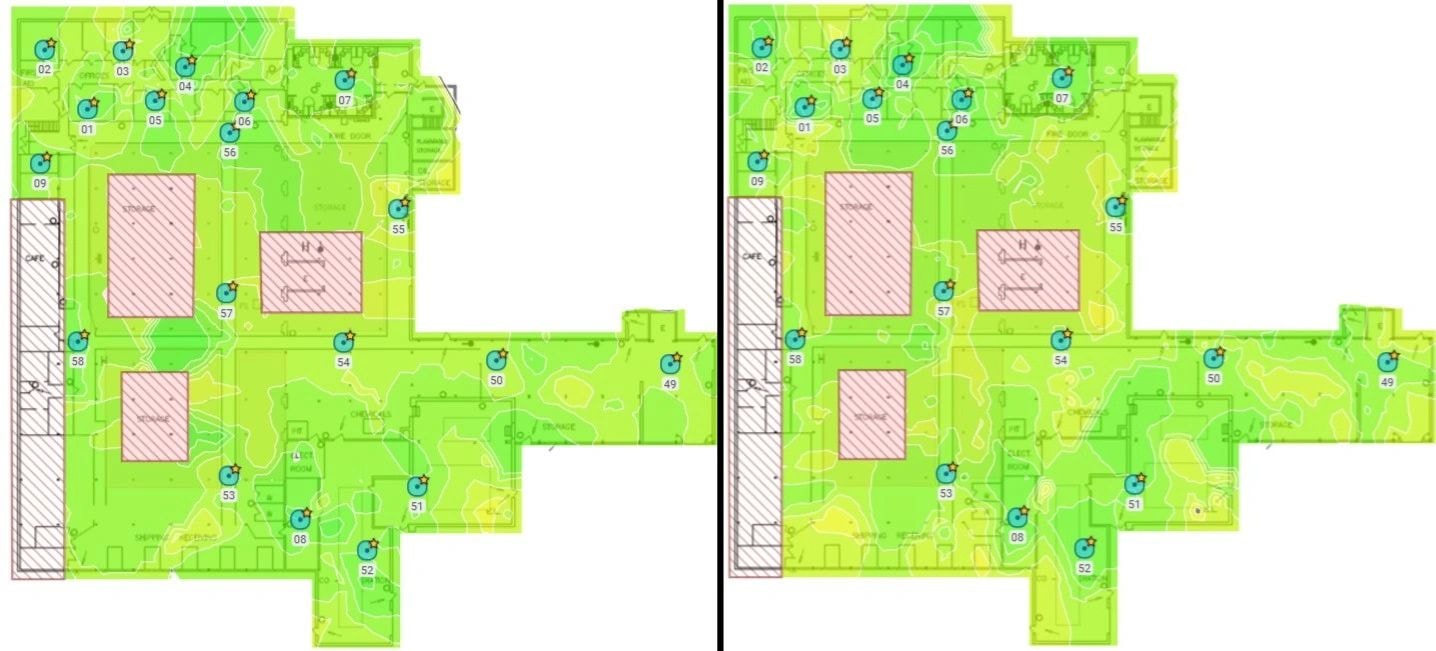
Ensuring a strong and reliable wireless network is critical for maintaining operational efficiency, as demonstrated by the case of manufacturing plant in Ontario, Canada . Persistent connectivity issues across office, production, and warehouse environments were hindering productivity, prompting the need for a Wireless Pre-Deployment Site Survey. Using Ekahau Survey Pro 11.4.1, the survey assessed network performance, identifying weak signal areas, potential interference sources, and providing actionable insights for Wi-Fi Coverage Optimization. This approach highlights the importance of Wi-Fi Planning and Design in addressing connectivity challenges and ensuring seamless operations.
A Wireless Network Assessment, such as the one conducted at this Ontario plant, is essential for Wireless Signal Analysis and Wi-Fi Interference Detection. It is essential for Wireless Signal Analysis and Wi-Fi Interference Detection. By creating Wireless Heatmap Analysis and Wi-Fi Coverage Mapping, the survey enabled targeted improvements in Enterprise Wi-Fi Planning and Wireless Network Deployment. The use of Active vs. Passive Wi-Fi Survey methods ensured a comprehensive evaluation, supporting Predictive Site Survey models and Wireless Network Troubleshooting.
Details of the Survey
Client Location and Issues Reported
- Location: Ontario, Canada
- Facility Type: Manufacturing plant with office / production / warehouse
- Reported Issues: Poor signal strength, frequent disconnections, and inefficient Cisco Meraki AP placement.
- Survey Duration: May, 2024
Site Details
- Total Area: 200,000 sq. ft.
- Ceiling Heights: Up to 37' in some warehouse areas.
- Challenges Identified: Thick concrete walls, RF interference from machinery, and high user density zones.
Survey Type
- Type: Pre-Deployment Wireless Survey
- Purpose: To identify weak signal areas, optimize network cabling, and ensure sufficient RF propagation.
- Tools Used: Ekahau Site Survey, Spectrum Analyzer for RF analysis, and passive/active Wi-Fi health checks.
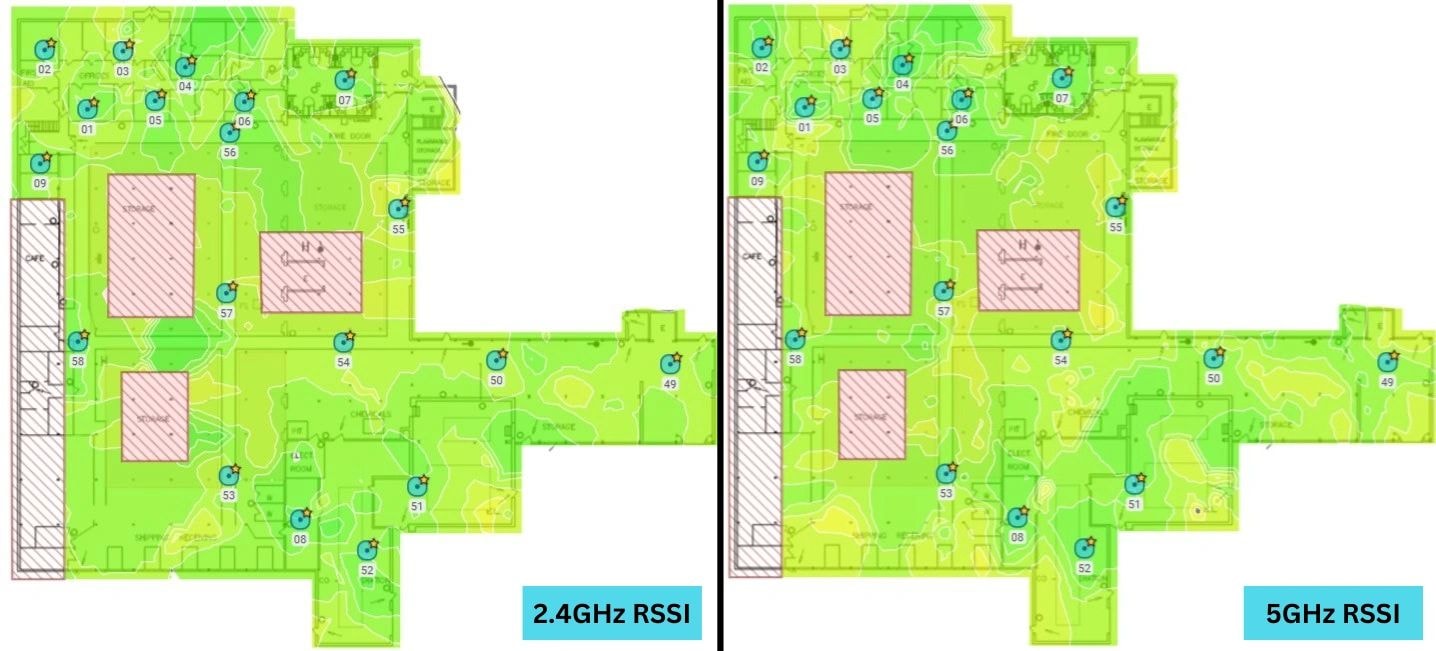
Signal Strength Comparison
Survey Findings
During the site survey, the following technical issues were uncovered:
- Coverage Gaps: Several production and warehouse zones exhibited poor RSSI (< -65 dBm), leading to unreliable connectivity.
- Channel Congestion: Overlapping Wi-Fi channels in office areas contributed to signal interference and reduced throughput.
- Suboptimal AP Placement: Some access points were mounted too high (>32'), affecting effective signal propagation.
- Limited Network Security Measures: Lack of rogue device detection increased vulnerability to unauthorised access.
Root Causes of Wireless Network Deficiencies
Wireless network inefficiencies often stem from a lack of strategic planning rather than hardware issues. Skipping comprehensive site surveys can lead to:
- Electromagnetic Interference (EMI): Nearby networks, structural barriers, and industrial equipment disrupt signals, causing packet loss and reduced throughput. EMI sources like microwaves, Bluetooth devices, and fluorescent lights require spectral analysis before deployment.
- Uneven Signal Distribution: Inconsistent signal strength due to architectural features like reinforced walls or high ceilings degrades user experience. Predictive RF modelling is essential to address these challenges.
- Network Congestion: High device density, bandwidth-heavy applications, and alternative connected technologies strain networks, causing latency and bottlenecks.
Solutions and Recommendations
Based on the findings, we proposed a strategic Wi-Fi network optimisation plan, which included:
1. Optimised AP Placement & RF Profile Adjustments
- Relocate Cisco Meraki APs to ideal mounting heights for better RF coverage.
- Optimise transmit power settings to reduce co-channel interference and ensure consistent SNR (>25 dB).
2. Structured Wiring Upgrades
- Upgrade AP connections to CAT6A for improved throughput.
- Ensure MDF/IDF installations are strategically placed to minimise cable runs (<295 feet per AP).
3. RF Interference Mitigation
- Use a spectrum analyser to identify rogue devices and sources of interference.
- Implement adaptive RF management in the 5GHz band to enhance Wi-Fi stability in high-density areas.
4. Security Enhancements
- Deploy Cisco Meraki's advanced security features to mitigate unauthorised access.
- Implement network segmentation to isolate guest and corporate traffic.
5. Future-Proofing for Scalability
- Provision additional fiber optic cabling to accommodate future network expansion.
- Schedule periodic Wi-Fi health checks to maintain network efficiency.
Final Thoughts
A Pre-Deployment Survey uses simulation tools, spectrum analysis, and field testing to identify and resolve these issues early, ensuring a robust, scalable network from the start. Optimising your wireless network starts with a professional site survey. Whether you need to resolve connectivity issues, enhance security, or future-proof your network, our experts can help. A Wireless Pre-Survey is an essential first step in achieving a high-performance Wi-Fi network. By addressing the connectivity issues, we help create a robust, interference-free, and future-ready network.
Please book a free consultation appointment by visiting our website at www.3sab.ca or contact us at sales@3sab.ca.